
Equipment selection
Fast- to medium-action rods in 8 or 9 weight are a practical choice for Exuma. If you can, bring a backup rod. A bonefish reel should have a dependable disc drag, a floating weight-forward line and at least 200 yards of 20-pound backing.
A 9-foot, 10-pound leader works in many situations. Conditions can require changes in leader length, fly weight and presentation, so ask before your trip if you are preparing a dedicated box.
Fly selection
Sink rate and colour matter because Exuma flats range from very shallow white sand to deeper water and darker bottom. A useful selection includes:
- Gotcha, sizes 2–6
- Gold-and-white Crystal Charlie, sizes 4–6
- Clouser Minnow, sizes 2–6
- Bonefish Special, size 4
- Bunny Gotcha, sizes 2–4
- Tan Mantis Shrimp or Bonefish Puff, sizes 4–6
Presentation is often more important than the exact pattern. The fly should appear to escape from the fish, not swim toward and attack it.
Understanding tides
A low rising tide can be productive when wading because fish move onto newly covered water to feed. Exuma’s tides vary from one area to another, so a local guide may be able to reach useful conditions within the same day.
At very low water, fishing may be on foot across a firm flat. At other stages, the skiff provides mobility and a better view. The right choice always depends on depth, bottom, wind and safe access.
Spotting fish
High-quality polarized glasses are one of the most important pieces of gear. Amber or copper lenses can improve contrast. Start scanning close to the boat, then work outward and learn the clock directions your guide will use.
Look for more than a fish shape
- Tails: a feeding bonefish may tip down and show its tail above shallow water.
- Muds: feeding fish stir the bottom, leaving a moving patch of discoloured water.
- Wakes: a cruising fish can push a subtle ridge or V across the surface.
- Moving shadows: on light bottom, a travelling dark shape may be the first sign.
Hooking and landing
Listen for distance and direction, make one purposeful presentation and avoid repeatedly picking up the line over the fish. Once hooked, stay calm and keep loose line clear while the fish makes its first fast run. Follow your guide’s direction for the rod angle, reel and landing.
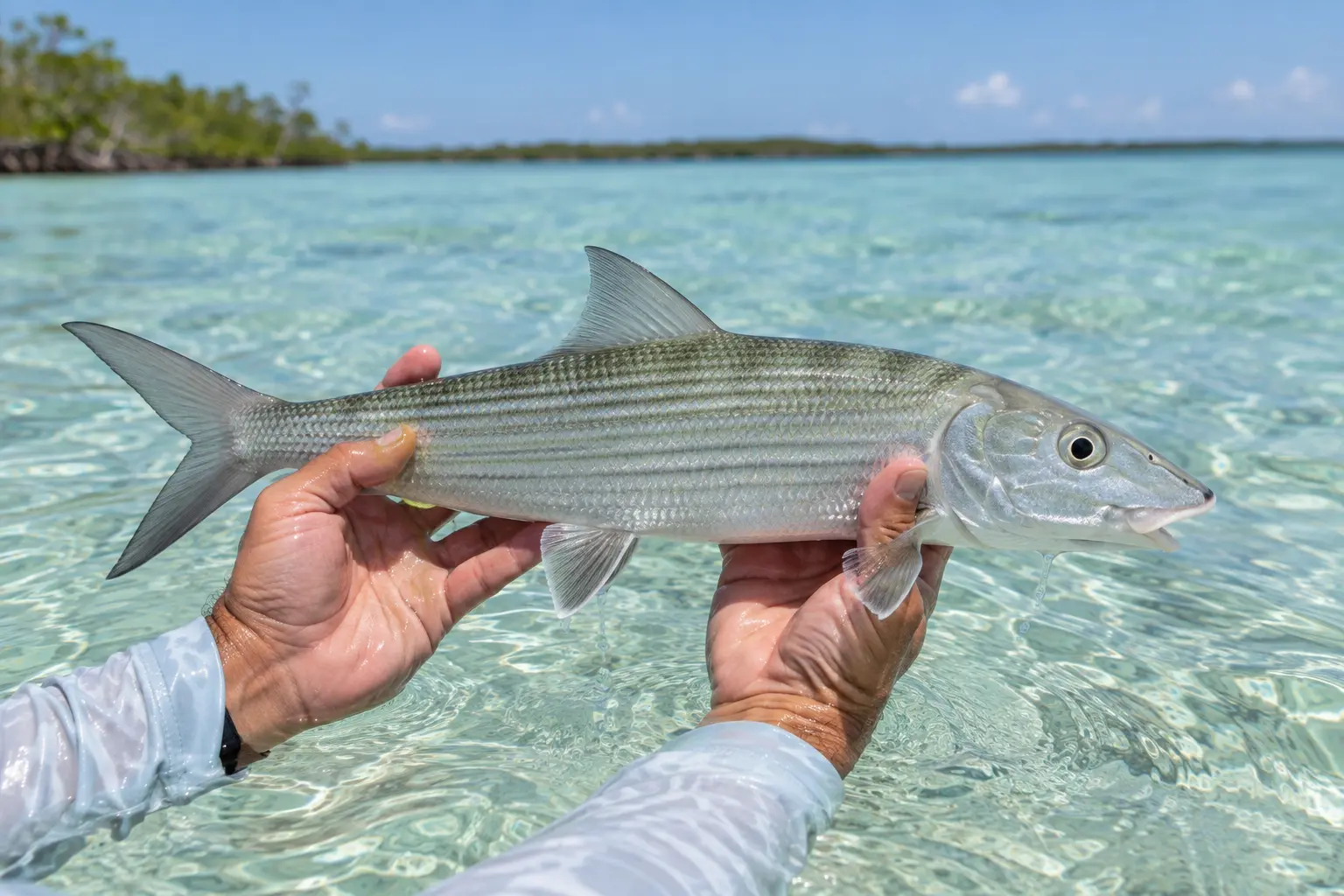
Handle a bonefish with wet hands, support it carefully, minimize time out of water and release it in good condition.